Soroban video lessons
A video of the teacher's hands, and a soroban on the same screen. Whatever you just saw, your fingers can try straight away. No experience needed — everyone starts at Level 0.
Free to start, with in-app purchases
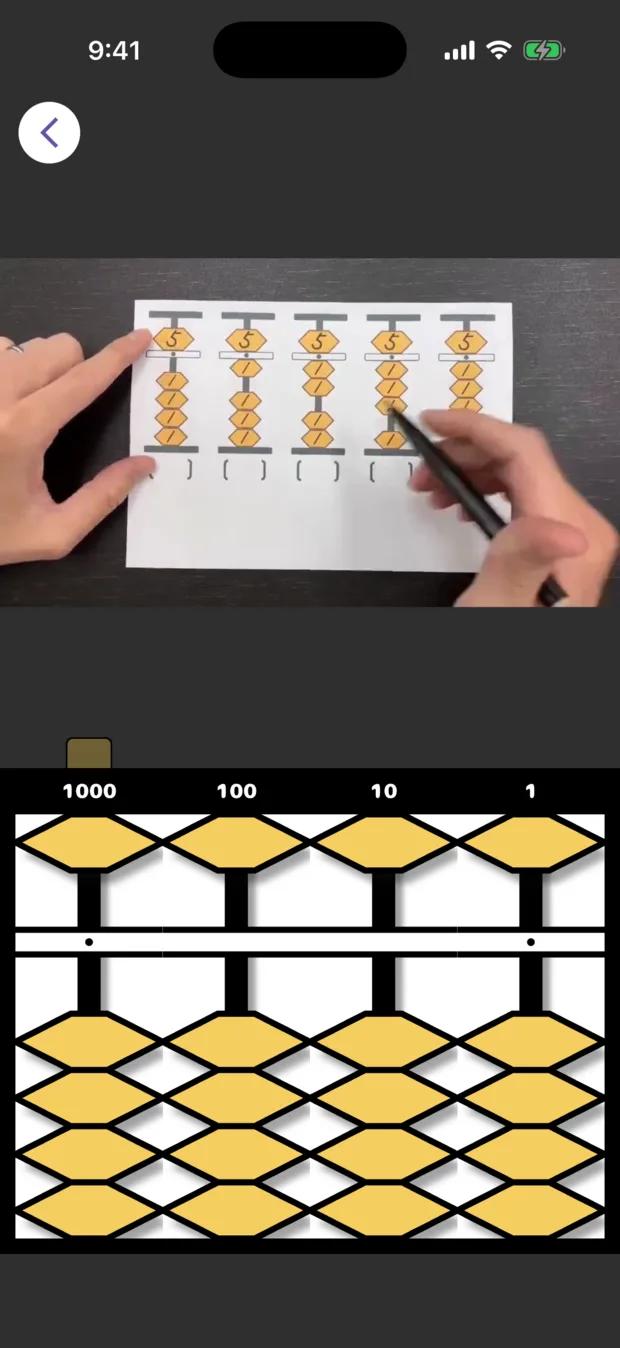
The actual app screen (Lesson)
Nothing to figure out first
The first lesson is called "Let's Get Started!" and it begins with how to place a bead. The order is decided for you, so there is no question of where to begin.
Taught finger by finger
The videos are real hands on a real soroban — you see which finger moves which bead. In practice, the app follows your moves and will not accept the wrong ones.
Alone, or at a soroban school
It works with nobody to teach you. Children who already attend a soroban school use it to look ahead at the next lesson, or to go over the day's work again at home.
Watch, practise, then try for real.
Every level holds all three. Being taught, getting used to it and checking yourself all happen inside one level.
Lesson
The teacher demonstrates on a real soroban. Your own soroban sits below the video, so you can pause, copy the move, and carry on watching.
Practice
Where the hands settle in. Nothing is timed, so you can check yourself one question at a time.
Test
Timed, to confirm it stuck. When the Lesson, Practice and Test are all done, the level gets a flower stamp.
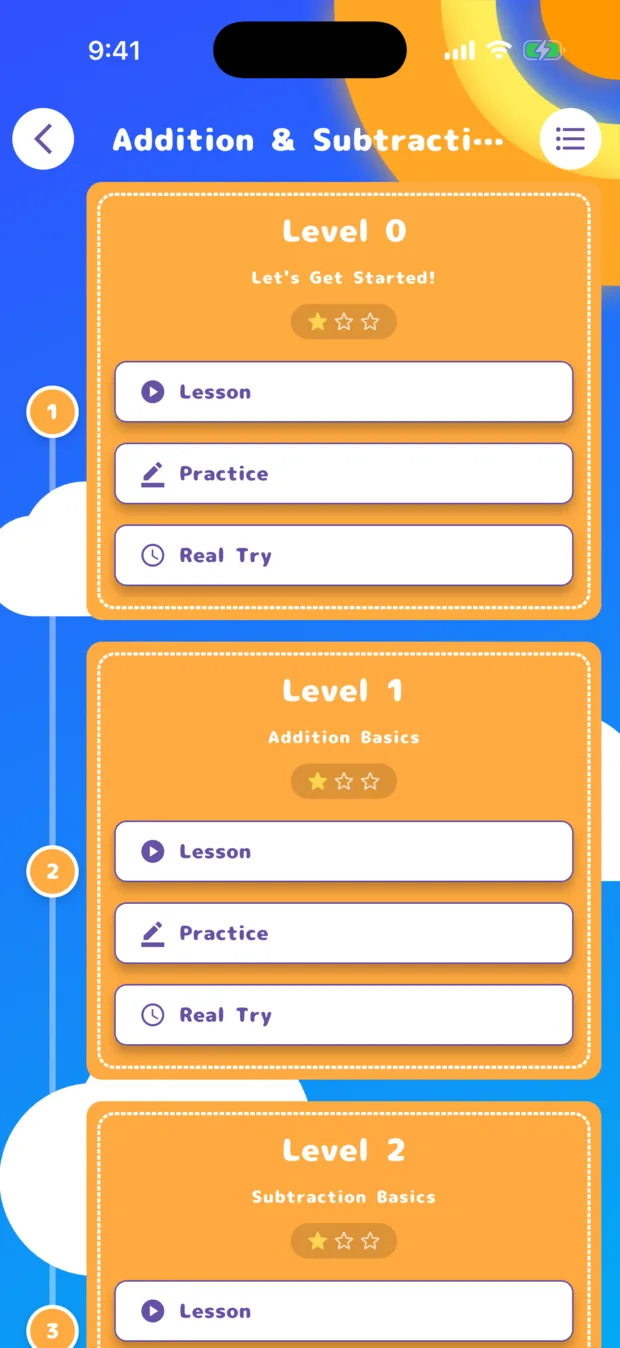
The lesson list (Abacus Addition & Subtraction)
What comes next is on one screen.
Levels run down the list, each with its own Lesson, Practice and Test buttons. Finished ones are marked, so you never have to hunt for where you stopped.
The stars say how hard a level is. The early ones are all one-star.
Which finger, which bead.
On a soroban, the right answer is not enough. The moves themselves are prescribed, and doing them another way keeps you slow. That is why it is the first thing to be taught.
The lesson video itself. The framing keeps the hands large
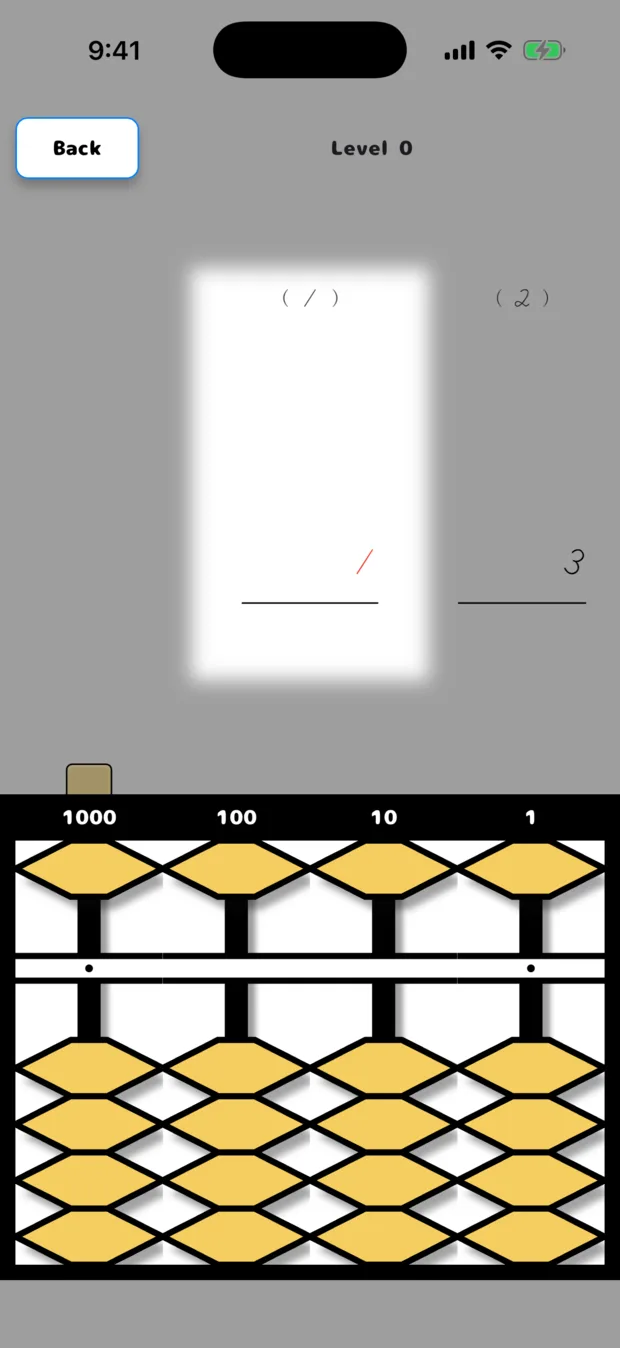
The wrong move does not pass.
In addition and subtraction practice, the order you move the beads counts as much as the answer. Move a bead other than the one you were taught and the question starts over, with the board back as it was.
It counts as correct only when the number is right and the sequence was followed to the end. There is no way through by matching the number your own way.
With a teacher or without one.
Starting on your own
- Lesson, Practice and Test all sit inside the level, so you can work through it on your own
- The order is fixed, so there is never a question of what comes next
- What you finish is recorded. Miss a few days and you pick up where you stopped
- No physical soroban needed — the beads on screen are enough to begin
Before and after class
- Look ahead at what the class will cover next
- Go over the day's work once more at home
- Pause and rewatch only the moves you are unsure of
- The timed Test makes a useful check before an exam
107 lessons.
From addition and subtraction through to multiplication and division. Each one comes with its own video.
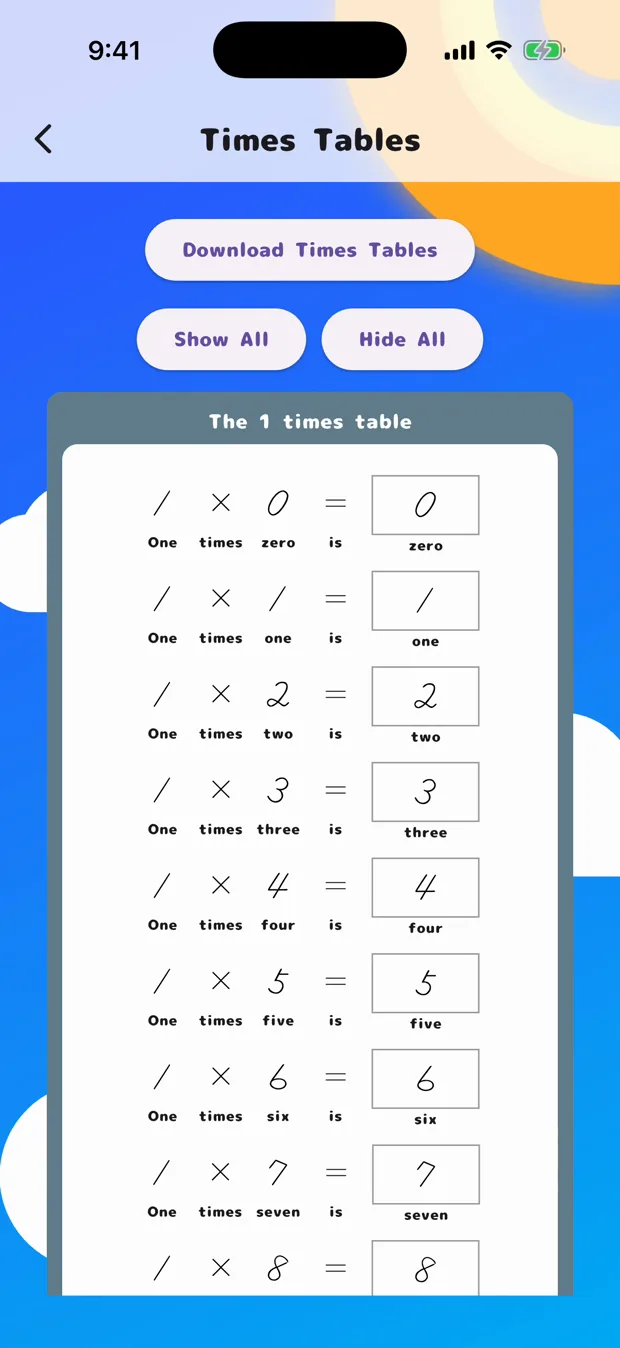
Times tables come before multiplication.
In soroban multiplication, everything stops when a times table does not come out. The times tables sit before multiplication as lessons of their own, starting with a look at the Times Tables.
Each times table can be drilled three ways: In order, Random and Fill in the blank. You move on to multiplication once it comes out on its own.
Before you start.
Do I need a real soroban?
Is it really for complete beginners?
My child already goes to a soroban school. Is there a point?
Won't my technique end up self-taught and wrong?
How long are the videos?
From how to move a bead to multiplication and division.
Start at Level 0, even if you have never touched a soroban. The base app is free.

